Context. UNIS, a logistics company modernizing its digital infrastructure, needed someone to sit between its design and development teams and make sure implementation actually matched intent. That intermediary role — not quite designer, not quite engineer, both at once — is the throughline of the whole engagement.
Process. The first move was pattern-finding: auditing the existing design system, isolating what was foundational versus composite, and deciding what to build first so consistency wouldn't erode as components piled up. As the build progressed, foundational pieces came first, with everything else assembled on top of them.
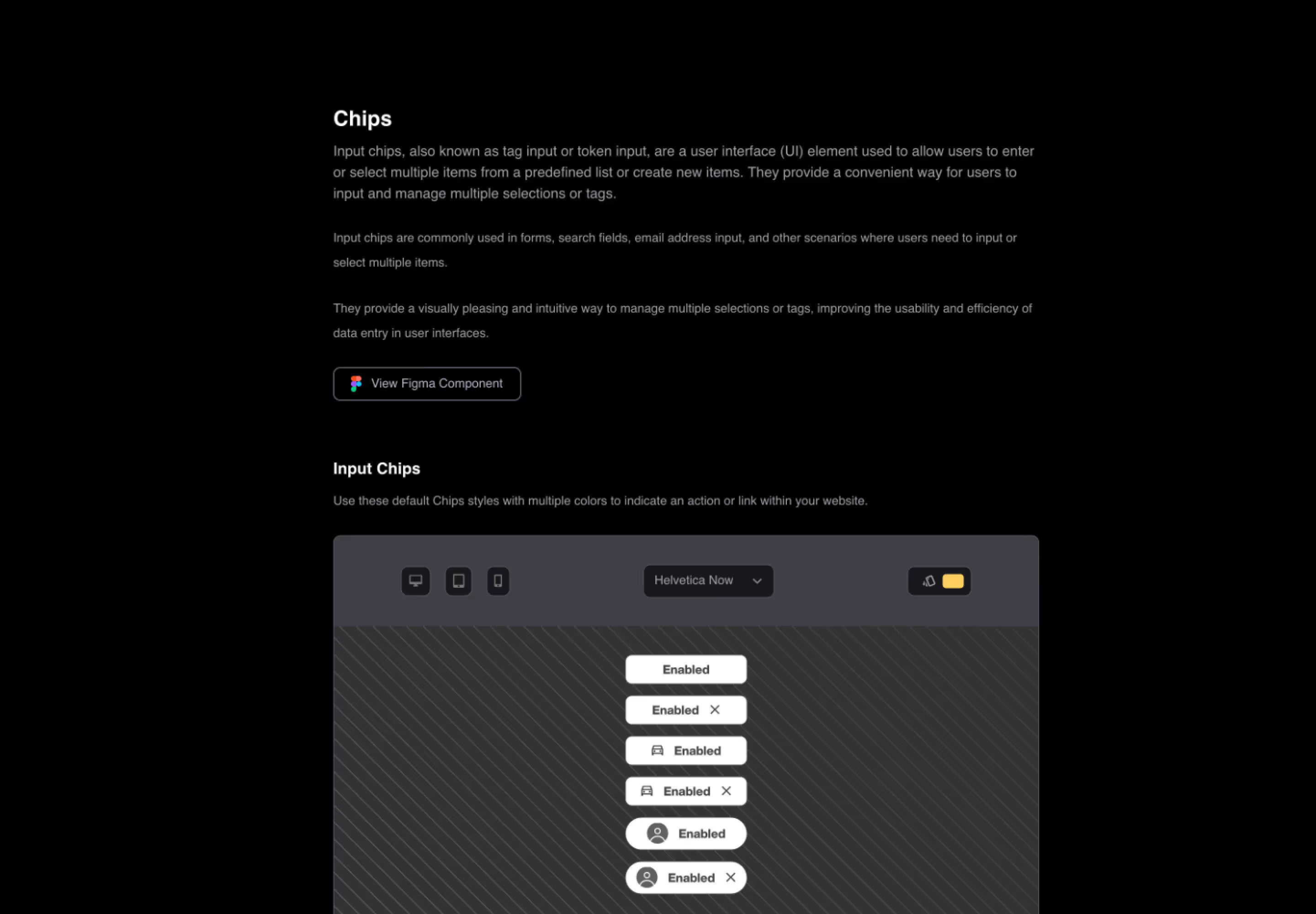
Solution. The deliverable was a living documentation site — a tight design-to-developer chain with fast feedback loops, where developers could copy code that replicated exactly what the design team was crafting, theme options included. It replaced hand-off friction with something closer to a shared, versioned source of truth.
A good developer experience generates good designer experiences — and good creator experiences create good user experiences.
Reflection. The belief that UI designers should be able to own the first pass of front-end implementation, then hand off to be connected in a federated way by the front-end team, is the exact thesis behind how this portfolio is organized today.